Paul McCartney Woke Up With a Melody He Thought Might Be Someone Else’s — Then It Became a No. 1 Classic
When Paul McCartney first heard the complete melody of 'Yesterday' in a morning dream, he spent weeks playing it for acquaintances out of fear he had unconsciously plagiarized an existing tune. The unusual genesis eventually birthed a cultural touchstone.
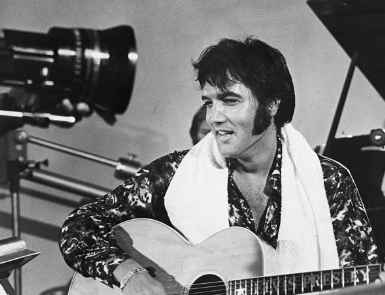
When Capitol Records issued “Yesterday” as an American single on September 13, 1965, it cemented its place among the most celebrated recordings in the history of The Beatles. Yet, its origins were remarkably unusual.
Paul McCartney discovered the tune after waking up from a dream with the complete melody in his head. Rushing to a piano, he immediately played the notes to ensure he wouldn't forget them. However, he doubted that he had composed it himself because the melody felt overly polished and familiar. For weeks, he played the piece for acquaintances to determine if he had accidentally plagiarized an existing tune or recalled something buried in his memory. When nobody could identify it, he finally accepted ownership of the music.
Before the iconic lyrics materialized, the track temporarily went by the working title “Scrambled Eggs,” featuring placeholder words entirely unrelated to the eventual melancholic masterpiece. Months of development ultimately transformed it into “Yesterday.”
Another unexpected turn occurred when the group gathered at EMI Studios in June 1965, as it quickly became evident that the arrangement had no room for the rest of the band. Ringo Starr struggled to devise a suitable drum beat, while John Lennon and George Harrison found no logical spot for their guitars. Consequently, producer George Martin floated a radical concept: Paul should perform the track entirely on his own, accompanying his vocals with an acoustic guitar. Martin further suggested incorporating a string quartet. Although Paul initially hesitated out of fear that the track would sound overly sappy, they settled on a minimalist arrangement featuring a cello, a viola, and two violins.
The finished master departed dramatically from typical Beatles output, lacking drums, electric guitars, and any musical contributions from John, George, or Ringo. It stood as the group's first official track driven by a lone member. Unsure how to handle such a departure from their standard sound, the band held back the track as a British single in 1965.
The United States took a different path. Capitol Records paired the track with “Act Naturally” for its September 13 release, backed by perfect timing: just a day prior, American audiences saw Paul perform the tune on The Ed Sullivan Show, accompanied by strings rather than the band's usual high-energy setup. The striking contrast captured the public's attention instantly, propelling the single to the top of the Billboard Hot 100, where it stayed for four weeks.
The composition's impact extended far beyond the charts, inspiring countless legendary artists to record their own takes, including Frank Sinatra, Elvis Presley, Ray Charles, and Marvin Gaye. Official figures from The Beatles note upwards of 2,200 recorded cover versions, and Paul McCartney's platform has referenced Guinness World Records acknowledgments confirming its status as one of the most frequently covered songs in history.
Considering its bizarre genesis—born in a dream, doubted by its creator for weeks, tested with silly breakfast lyrics, and nearly abandoned by the rest of the band—its journey to becoming a chart-topping standard remains truly extraordinary.
More Stories You May Like
Lee Marvin Was an Oscar-Winning Actor, Not a Pop Singer — Then His One Hit Kept The Beatles From No. 1
When rough-hewn Hollywood tough guy Lee Marvin recorded a gravelly tune for the film adaptation of Paint...
Kris Kristofferson and Rita Coolidge Fell in Love, Made Three Albums, Won Two Grammys — Then the Duet Ended Offstage Too
Merging Kris Kristofferson's weathered baritone with Rita Coolidge's warm, measured delivery, the famous...
Barbara Mandrell Retired From Music at 18 — One Night at the Grand Ole Opry Changed Her Mind
Before claiming the Country Music Association's highest honors and achieving superstardom, a young Barbar...
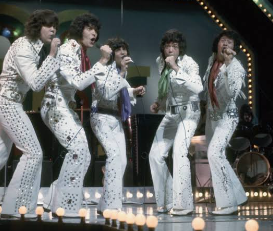
The Osmonds Had Been Singing Songs Chosen for Them — Then They Wrote a Hit of Their Own
Eager to break away from outside songwriters and a pre-packaged teen-idol image, the Osmond brothers seiz...
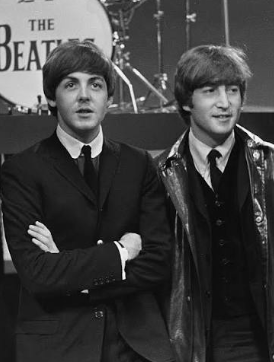
John Lennon Sat at a Piano and Asked the World to Imagine the Impossible — The Song Never Stopped Traveling
Amid the turbulence of the Beatles' bitter breakup and ongoing legal battles, John Lennon retreated to hi...
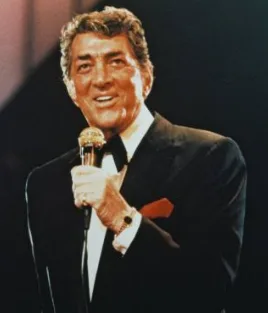
Dean Martin Didn’t Want a Weekly TV Show — So He Made Demands He Thought NBC Would Never Accept
Convinced that NBC would reject his outrageous demands, Dean Martin tried to sabotage negotiations for a...
Dean Martin Didn’t Want a Weekly TV Show — So He Made Demands He Thought NBC Would Never Accept
When NBC approached Dean Martin about hosting a weekly variety hour in 1965, the singer tried to sabotage...
Why Old Family Recipes Carry More Than Flavor — They Carry the People We Remember
Stained index cards and flour-dusted notebook pages do more than preserve meal instructions; they act as...